Paperless Manufacturing: The Path to a Digital Shop Floor
Why the digital work instruction is the foundation of paperless production
Paper persists stubbornly in manufacturing, especially where the actual work happens: at the workplace. While planning and administration are often already digital, travelers, printouts and inspection sheets still lie at the line. This is exactly where it is decided whether a production line truly becomes paperless. This article shows what paperless manufacturing means, why it begins at the workplace and what role the digital work instruction plays as its foundation.
What Paperless Manufacturing Really Means
Paperless manufacturing is more than scanning documents and providing them as a PDF. A stored PDF may replace the sheet of paper, but it remains static and still has to be searched for, opened and kept up to date. A production line only truly becomes paperless once the required information is available interactively, in real time and always in its current state, directly at the workplace. It is therefore not about replacing paper one to one with files, but about shaping the flow of information so that paper simply is no longer needed.
Why the Workplace Is the Real Starting Point
In many digitalization projects, the large systems take center stage first, namely ERP and MES. These systems are important because they plan and control production. But they do not remove the paper at the line. The worker still holds the printed traveler, the printed inspection sheet or the filed work instruction in their hands. It is exactly there, at the place where value is created, that the most stubborn paper sits. Paperless manufacturing therefore does not succeed from the top down through the ERP alone; it has to start at the workplace, where the paper is actually used.
The Digital Work Instruction as the Foundation
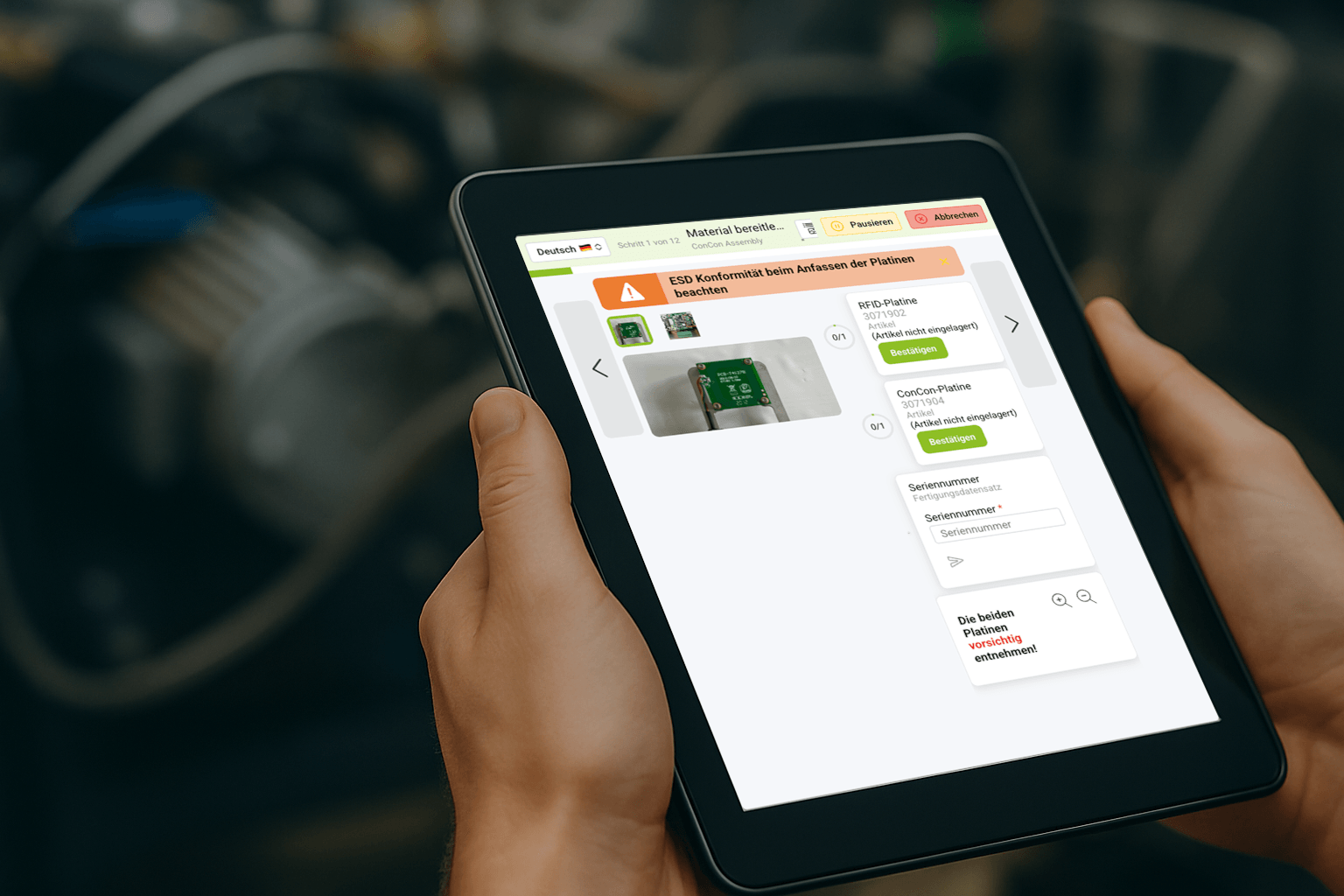
The digital work instruction is the building block that replaces the central paper at the workplace. It brings the current, approved version directly to the workstation, guides step by step through the task and captures evidence, measured values and checks directly within the workflow. This removes not only the printed instruction sheet, but also the accompanying inspection and evidence paper. Several paper documents that used to sit side by side become a single digital workflow. This is exactly why worker guidance is the basis on which a paperless shop floor is built.
Step by Step Toward a Paperless Shop Floor
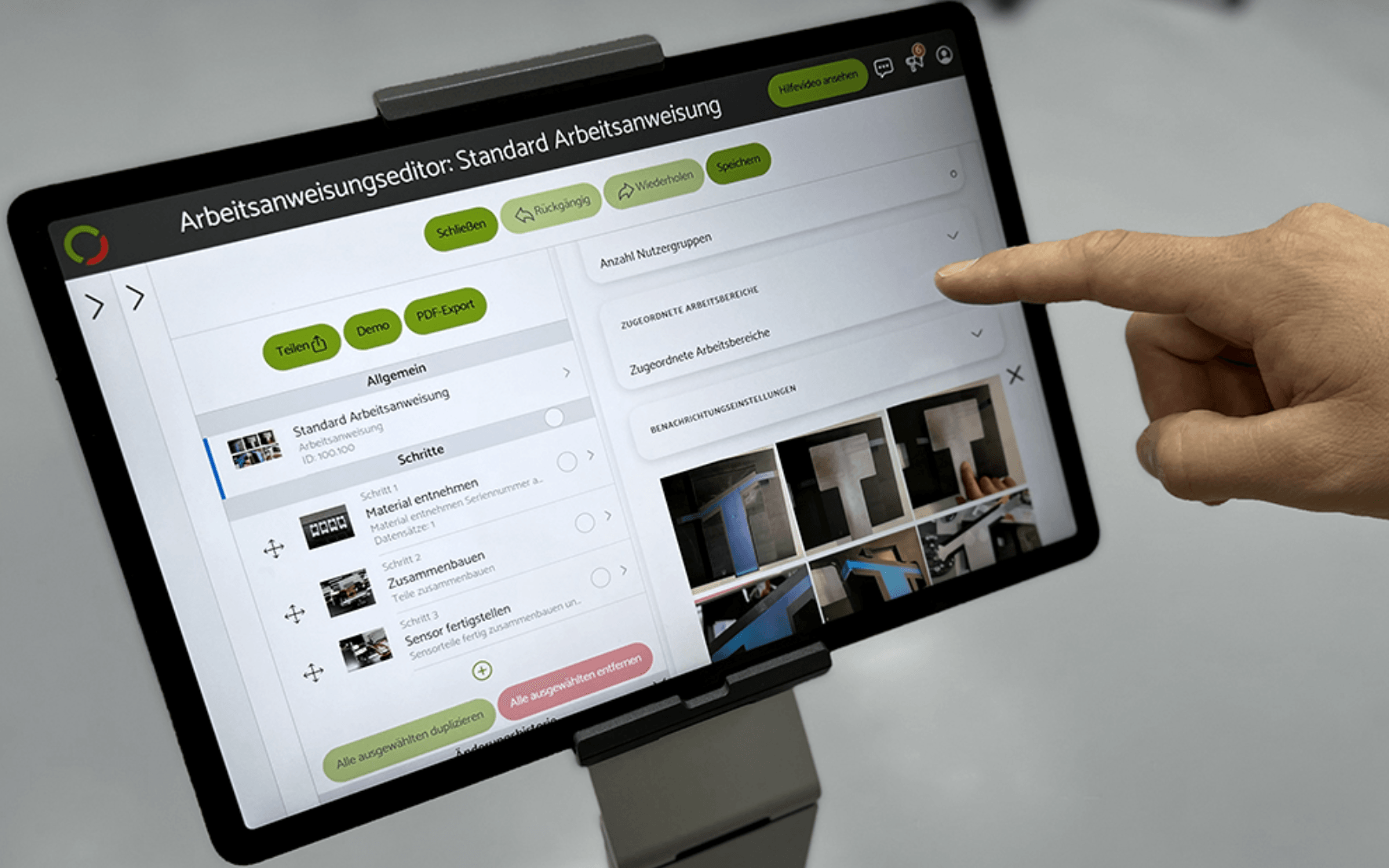
The path to paperless manufacturing does not lead through one large overhaul, but through the step-by-step replacement of paper, process by process.
- 1Analyze the current state: Identify where paper is used throughout the production workflow today, from the work instruction to inspection sheets to the traveler.
- 2Choose a pilot area: Start with an area where a lot of paper accumulates or where error costs are high, to achieve a visible effect quickly.
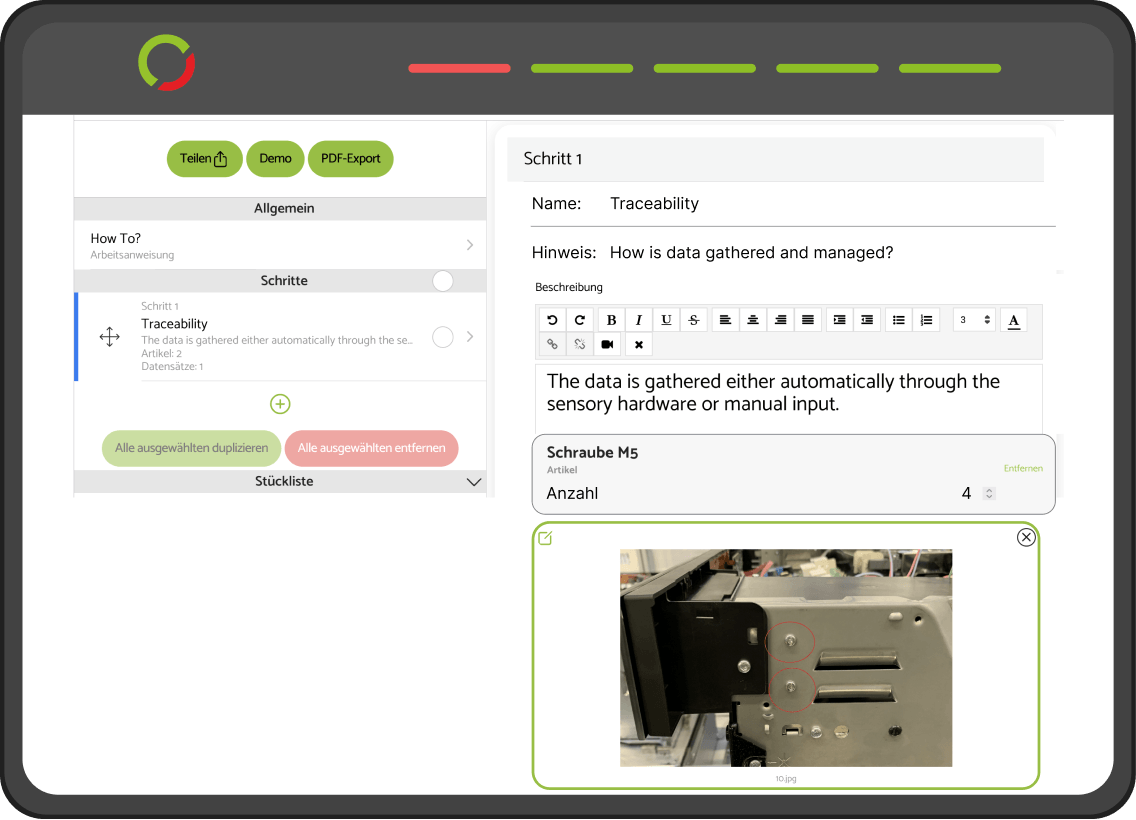
- 3Digitize work instructions: Replace the central instruction and evidence paper with the digital, guided instruction.
- 4Integrate evidence and inspections: Move inspection records and evidence directly into the digital workflow, so the accompanying paper is eliminated as well.
- 5Expand step by step: Transfer the paperless workflow area by area across the entire production, instead of converting everything at once.
The Paperless Shop Floor Does Not End at the Instruction
Once the core paper at the workplace has been replaced, the paperless idea can be extended further. Digital order papers make the printed traveler unnecessary, electronic displays such as e-paper tags replace paper labels on material containers and workstations, and material transport too can increasingly be organized without accompanying paperwork. The digital work instruction is the starting point here: once the flow of information at the workplace is digital, further sources of paper on the shop floor can be connected step by step. This is how a fully paperless shop floor gradually grows out of the paperless instruction.
Conclusion: Paperless Begins at the Workplace
Paperless manufacturing is not a pure IT project that can be solved through ERP and MES alone. It is decided where the work actually happens, at the workplace. The digital work instruction replaces the most stubborn paper directly at the line and forms the foundation on which the paperless shop floor can be built step by step. Anyone who wants to achieve paperless manufacturing is therefore best off starting exactly where the paper still sits in the worker's hands today.
How the individual work instruction can concretely be detached from paper is explored further in the article on digitizing work instructions.
FAQ
What does paperless manufacturing mean?
Paperless manufacturing describes the transition from paper-based to fully digital production workflows. What matters is that information is available interactively and in real time at the workplace, not just as a stored file.
Where does paperless manufacturing begin?
It begins most effectively at the workplace, where most of the paper is actually used. The digital work instruction replaces the central instruction and evidence paper there and forms the basis for the further path.
Is an ERP or MES system enough for paperless manufacturing?
ERP and MES plan and control production, but they do not remove the paper at the workplace. A truly paperless manufacturing process additionally requires digitalization at the point of execution, for example through digital work instructions.
Erfahren Sie, wie SETAGO Ihre Produktionsprozesse optimieren kann.
Demo vereinbaren